Alonzo Franklin Parish and Ida Lavisa Pettingill Family Blog

To all Family Members:
Share your pictures and stories about our ancestors by sending them via email to: brenda.bailey.1@hotmail. They will be posted on the family blog and available for all of our family to enjoy.

Heritage Album

HERITAGE ALBUM
Black and white photos aged with time now cover the pages before you. These pictures are a reminder of a moment in time and give us a past to hold onto.

The harders of times our loved ones endured as they steadily paved the way. Gratitude and respect they have earned and their legacy of love we can never repay.

Each photo has a story of personal happiness, heartaches, blood and sweat. But for their individual journeys and their legacies to live, the sacrifices we must not forget.

Hold onto the history stored within these precious pages and allow these stories to live. For these memories of trial and triumph are the most priceless treasure that one can give. By Wendy Silva

Old Photographs by Ernest Jack Sharpe

OLD PHOTOGRAPHS by Ernest Jack Sharpe
A box of faded photographs I opened yesterday, And instantly my memories were carried far away

To many friends and places, from years so long ago, As I sorted through those photographs of folks I used to know.

There were some of family members that are no longer here, and photographs of sweethearts I once thought very dear.

Thoughts swiftly raced and tumbled on things that are no more, As I daydreamed over photographs and happy days of yore.

ANCESTORS

ANCESTORS

If you could see your Ancestors All standing in a row, Would you be proud of them, or not, or don't you really know?

Some strange discoveries are made in climbing family trees. And some of them, you know do not particularly please.

If you could see your Ancestors all standing in a row, These might be some of them perhaps, You wouldn't care to know.

But here's another question which requires a different view, If you could meet your Ancestors, Would they be proud of you?

Wednesday, November 16, 2011

Ida Lavisa Pettingill Life History

Ida Lavisa Pettingill was born in Elba, Cassia, Idaho on March 2, 1884, the fifth of nine children. She was the daughter of John Christopher and Everline Taylor Pettingill.

She spent her young girlhood in Elba moving to Willard, Box-Elder, Utah and then back to Elba, Idaho. She lived on a farm and did what most farm girls did, helping with the younger children. She went to the Upper District School, there being the Upper and Lower Districts. She went to the lower district part of the time.

Her father was a good violinist and Ida and her other sisters had to accompany him on the organ as he played for dances at Elba and surrounding towns. Sometimes they took their own organ. She loved to dance, and the dances were all night affairs in those days. Everyone took food and all shared and ate about midnight. I can remember the old Ward House which my grandfather helped build. In the West end there was a bed where all of the babies were put while they danced. Grandma had a lovely voice and used to sing in the choir and sing solos at ward functions and funerals.

Grandma was a cowgirl. Grandma and Grandpa were childhood sweethearts, knowing each other all of their lives as they grew up together. She was a pretty girl and he was a good looking boy. On August 13, 1902 they were married at her parent’s home in Elba. They spent their honeymoon on a hay ranch in Malta, Idaho as he had a contract to harvest the hay, and she cooked for the crew. Later they went to the mine in Connor Creek, he working in the mine and she cooked for the workers there. She tied her belongings in a sheet and moved on her horse.

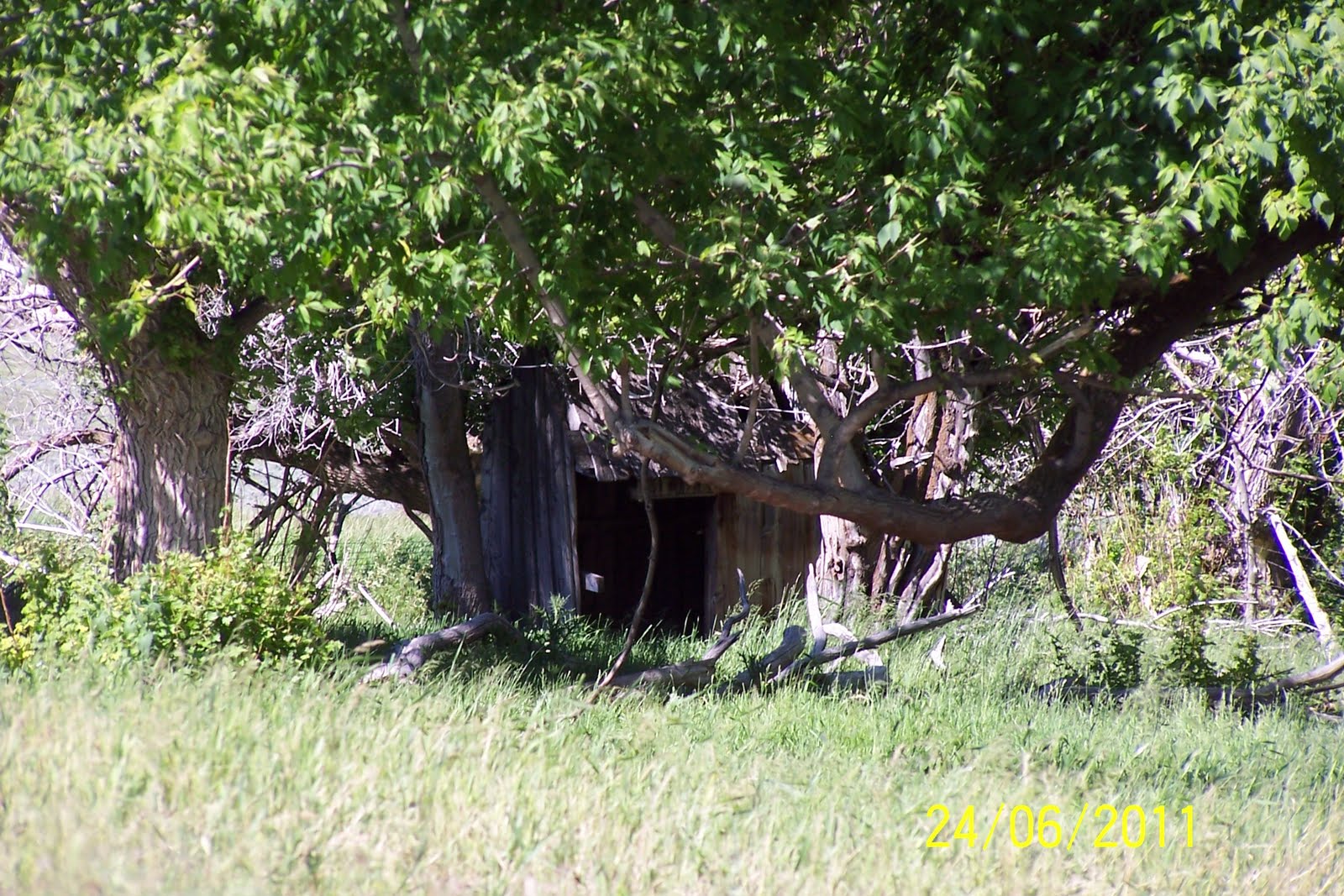
Pictures of where Ida grew up in Elba Idaho. The house burned down but some of the outbuildings are still there.


Later they were sealed in the Salt Lake Temple on Aug 13, 1903.

In 1904 they bought an 80 acre farm of Hyrum Ward's in Elba. This was the family home for 45 years. The house was just two rooms at first, then two more rooms were added and later a five room home was built, using the original two rooms. All of her children were born, raised and married while still living in that home. She used orange crates for furniture and oat straw to fill the the bed. There was no running water in the house. They made their first carpet out of rags. They bought a sewing machine and the last payment was a cow. She made all of her soap.

Ida was active in the ward taking part in dramatics, President of Y.W.M.I.A.; Counselor in the Relief Society (1925), teacher in Sunday School, ward organist and secretary for the Sunday School for 7 years.

Picture of Elba Relief Society Building where Ida served as 2nd Counselor in the Relief Society for several years.
Elba Ward Relief Society Building


The transportation was first by horseback, wagon buggy and then a Model-T Ford and later they had other cars. She made trips to Ogden for supplies. They borrowed a stove and bought a table. She had one new dress a year and purchased flour from the mill.

Ida was an expert seamstress making all of their clothes and coats. She knitted the stockings. She made over all the clothes she could get to do that were worth sewing. She not only sewed for 7 children but neighbors and relatives. She made all of the quilts. She was always making something for the children or for the home. She had good taste. They stored ice in a sawdust bin under the wagon shed. They had lots of blizzards and snowstorms.
Ida July 1945 in her yard in Elba
She was a good cook and always had a big garden, berries and fruit patches, which they canned for the winter. It was no small task to keep 9 people clothed and fed. Most of the children had music lessons and other advantages that were available.

Ida didn't enjoy very good health, being anemic. They were a long way from a doctor and so she nursed her family through illnesses. When the children had measles, she got them too and then getting pneumonia she almost died. She was ill for a long time.

She used to go out helping the sick, especially pneumonia patients. Geral had it twice and she took care of him not getting undressed for many nights. She also helped lay out the dead and make burial clothes along with the other Relief Society Sisters. There weren’t undertakers then. They put a breast plate on top of the caskets.

After the children were married, they sold the farm and bought a 40 acre farm in Burley in 1950 where they lived until grandpa's death. Their son Oel and his family bought the farm. She moved into different places and then later into the Romney Apartments, where she lived until she went to live with her daughter Alta in Utah.

Ida lived in the Romney Apartments 1501 Miller Ave in Burley until she went to live
with her daughter Alta before her death

While in Burley she was chorister and visiting teacher. She has been a devoted wife and mother, teaching her children to do right and helping her husband in anyway she could She as broken her hip twice but recovered very well.

Grandma died peacefully at Aunt Alta's home in Salt Lake City, Utah on 20 Dec. 1974. She was buried at Gem Memorial Gardens in Burley, Cassia, Idaho on the 23 Dec. 1974 in a beautiful white velvet casket.

Tuesday, November 15, 2011

Alonzo Franklin Parish - Tribute Given at Funeral

The following is a tribute given at his funeral by Sylvan Burgi written by Alta Parish Glade, a daughter:

He was small of stature, five feet seven was all he stood,
But he accomplished as much as most any man could.
He only weighed one forty five, but was as active as any man alive.

He could always find something to do,
And how to work was one thing he knew.
He toiled from early morn till night,
And he’d never do anything if he thought it not right.

He was hones in his dealing with men,
And he was always in harmony with the gospel plan.
He scattered gladness and sunshine along his way,
And he brought joy to the hearts of those who listened to what he had to say.

He was a man with a heart of gold,
And a character that couldn’t be bought nor sold.
Seasoned with toil, sorrow and sweat,
Somehow he didn’t look old, just yet.

With seventy one years written across his brow,
Only death has stilled his earthly labors now.
But he will go on in the eternal realm,
And may you find peace, knowing that God is at the helm.

Alonzo Franklin Parish Life History

Alonzo Franklin Parish was born 16 April 1882 in Willard, Box Elder, Utah. He was blessed on 2 June 1882 and baptized on 12 July 1890. He married Idaho Lovisa Pettingill on 13 August 1902 in Elba, Cassia, Idaho.

Alonzo had a wonderful disposition, seldom getting angry. He loved to whistle, sometimes a little off key, but sounded good to his kids.

He was an early riser and expected everyone to be up and about his duties. He was noisy when he arose to build the fire. He worked long hard hours not always doing justice to himself. He enjoyed working and seldom took time off for fishing or relaxation. He got his enjoyment out of nature and watching his crops grow. He loved the mountains close by.

He loved his children, romping with his own and the neighbors. Every grandchild was a great event so he could enjoy soft sweet kisses. He was much like his mother, reciting poems, singing catchy tunes, etc. All children were nice to him, brown black or white, clean or dirty.

He worked hard with his wife to raise their children. They always had plenty to eat and there was always room for others. He sheared sheep in the surrounding towns and enjoyed talking to his many friends.

Lon provided a comfortable home for his wife and family. He made a closed in breeze way from the kitchen to the cellar so they didn’t have to go outside. He built a small building that held ice using sawdust to insulate it so they could have root beer on the 4th of July. He also sold ice blocks during the summer months. He put in the first indoor bathroom in the Elba Valley. Theral was a senior in high school when the electricity was put in the house.

He was an honest man and never beat anyone out of anything. In fact, he wouldn’t collect bills if it would cause hard feelings. He wasn’t a good businessman but friends with everyone. He administered to the sick, helped deliver babies, etc. “Lon” as he was known was in the Bishopric for 23 years. He also was a good actor and served as drama director.

His children were Alta, Delta, Orvis, Eveline, Oel Elihu, Geral John and Theral Fredrick. In 1950 they moved to Burley, Cassia, Idaho buying a 40-acre farm. He enjoyed the farm since it was easier work and there was plenty of water. He raised good crops there.
Alonzo and Ida Parish 50th Wedding Anniversary - 1952

He was killed on the 16th of April 1953 on his 71st birthday. He was plowing the garden alongside the creek. The tractor wheel hit a cement block and the tractor overturned into Goose Creek which ran through their property next to the garden, pinning him underneath it. His wife, Ida was watching him work from their living room window. He was buried 20 April 1953 at Gem Memorial Gardens in Burley, Cassia, Idaho.


Pictures of Homestead in Elba where Alonzo and Ida raised their family.


Sunday, November 6, 2011

Benjamin Taylor Life History

Benjamin Taylor was born 11 Dec. 1814 in Ledbury, England.  His parents were John Taylor and Sarah Minet.  He was baptized into the Church of Jesus Christ on 15 Aug 1840.  He married Mary Ann Dorset Fenner 25 Oct. 1837 in Worcester, England.  They came to America and lived in Iowa where six children were born.  They moved to Willard Utah.  His son Paul Taylor (Apalas) built them a two room house in the orchard next to his home.  He had dark hair.  Ida Parish told of things she remembered when visiting.  He kept wine in his cellar that he made from his grapes.  He always kept the door locked.  The grandchildren would ask to taste his wine.  He only drank it at mealtime.

In the attic they kept silk worms.  The fed them mulberry leaves.  They weren't kept in boxes but they always stayed in one room.  They spun the silk for clothing.

Every year Everline and the children would go to Willard and can fruit then haul it back to Elba.  He was quite tall.  He died 11 Dec. 1907 in Willard, Box Elder, Utah.


Mary Ann Dorset Fenner Life History

Mary Ann Dorset (Fenner)
Mary Ann Dorset Fenner pulled her hair in a bun and was quite short.  She had a mole on her lip and had dropsy or watery blood and would get real big.  The grandchildren carried a chair for her to sit on after every three or four steps. 

Mary Ann was born 14 Feb 1817 in Mushmarkle, Hereford, England.  Her mother was Maria Dorset and her step father was William Fenner.  She took his name as an adult because she was an illegitimate child.  She was baptized into the Church of Jesus Christ in 1840.  She was married to Benjamin Taylor on Oct. 25, 1837.  She was the mother of nine chldren.  She died 10 Oct. 1892 in Willard Utah.


ANCESTORS (This is not all documented as facts)


Friday, September 9, 2011

John Christopher Pettingill

Family Group Record
Submitted to Family Blog by Suzanne J. Belger (desertmtnmalinois@gmail.com)

Husband
John Christopher Pettingill
Wife Eveline Taylor
Notes
HUSBAND - John Christopher Pettingill
This information was gathered by Renae Moncur from sheets of
Brenda Parish Bailey

1. Elba Ward Records GS film #2462 birth, blessing, death and name of child #6 & child #7
2. Marriage record of husband & wife Microfilm #M0375 Batch #M183398 Serial #0318
3. marriage records Cassia County Courthouse
4. Elba Ward Records film #9538 007450 show birth, bapt death & marriage records of all family members
Another sourse:
Ancestral File

CHILD 6 - Clotilda Pettingill (Twin)
She was a twin with Robert Pettingill who was still born
On other records we found that she was named Matilda

CHILD 7 - Robert Pettingill
Was a still born twin of Clotilda Pettingill

Sources
1. Delta Parish Wickel, Pedigree Chart, Deborah Beecher Jones, 26 West 200 South, Burley, Idaho 83318.
2. Delta Parish Wickel, Pedigree Chart.
3. Payne Mortuary, Funeral Program for Ida Parish, Deborah Beecher Jones, 26 West 200 South, Burley, Idaho 83318.
23Nov2009


John Christopher Pettingill
30 August 1850 - 10 December 1921
Born August 30, 1850 at Kanesville, Lee County, Iowa
. Died December 10, 1921 at Willard, Box Elder County, Utah
John Christopher Pettingill was born at Kanesville, Lee County, Iowa, 30 August
1850, the eldest son of Elihu Ulysses and Jane Clotilda Marsh Pettingill. The family joined
the church in the middle west, suffered many hardships, and john, being the eldest, had
many responsibilities.
When he was two years old, the family moved west by ox team with a large company
of Saints, lived in Bountiful, Utah and Ogden, Utah when he was smal1
. Then the family
moved to Willard, Utah .
. In Willard he met, courted and married Everline (Eveline) Taylor in the Endowment
House in Salt Lake City, Utah. After his marriage, he lived on his father's farm until they
had three children. He and his family moved to Snowville, Box Elder County, Utah, then
to the Dilly Ranch, where he farmed.
At this time, many of the young people of Willard were moving to Elba, Cassia
County, Idaho, so John took his family and went there too, homesteading an eighty acre
farm. At that time they could cut hay from the meadows for the livestock. They went
there in 1877.
The early settlers had trouble with the Indians, as they had camped and hunted there
for many years
.
Grandfather was a good carpenter and helped build many of the early homes, the
church and schools. He was always called to help build the caskets of his neighbors, as
there were no mortuaries
. All of them were built from lumber hauled in from Ogden, Utah
by freight wagons and teams. The freight wagons were owned by his brother-in-law,
Thomas Taylor, who also owned the general store in Elba. John was a good farmer and
stock raiser.
Wood poles and logs were brought from the near by canyons which they used to build
the log homes, poles for the fences and corrals, and for firewood. Brick homes were built
later.
One time, while getting a load of wood, he cut his foot across the instep. He rode
home on the load of wood. The wound took a long time to heal, so he learned to knit, as
the stockings the children wore were all hand knitted. One side of his shoe had to be built
up after the accident
.
He was a very accomplished violinist, having studied with Evan Stephens, first in
Willard, then in Salt Lake City He played for dances at Elba and surrounding towns
. He was accompanied by one of his daughters. They would load the organ into the buggy, or
wagon
, or white top buggy and go to surrounding towns to play. Dances were an all night
affair so supper was served at midnight
. The pay was $10.00 per night, which was very
good pay at that time.
He taught many boys to play the violin, among them was Hank Perkiser, an Indian. He
stayed in their home many times. Later he took his own life
.
John was(n't) a particularly religious man, but very interested in the affairs of the
community and was much respected and helped by many people. Later, the family moved
back to Willard selling their farm to their son John.
John died on December 10, 1921 in Willard, Box Elder County, Utah and was buried
in Willard. 


A Tribute to John Christopher Pettingill
By Ransom Beecher, a nephew

They have records sent out by the church for the old time dances (here in Brigham
City) supposed to be the best old-time music for the dances, but when you compare them,
. especially the quadrilles, it sounds pretty tame. Wouldn't it have been something
wonderful if we could have made some records of Uncle John's hornpipes a and handed
them down to our children now they are beginning to appreciate the good old past?
Bishop Wright used to say, "I have danced allover the country, but 1 never found anyone
that could make you hit the ceiling as nearly as John Pettingill's music.
They play some of his old tunes, but how? About like Tom Babbit or the rest of us.
You can dance by them but they don't pick you up and carry you up in the sky.
1 think the finest tribute 1 ever heard paid anyone was that Christmas (or was it New
Year's) when they coaxed the Elba Hall Committee to let them go after Pettingill to play.
Uncle Merritt Beecher was playing. The house was full, the dance was going, forming for
a plain quadrille, and you know what a tumult of chattering and laughing that meant
.
Suddenly it all stopped short, still as a mouse. You could have heard a pin drop.
Pettingill stood in the doorway, that old violin under his arm. Every eye was upon him as
he walked up to the stand - he took plenty of time, as you well remember. It took a long
·
time to unwrap the flannels, to rosin the bow, to tune up. He didn't start out, like some
today, half tuned. It had to be exactly perfect
.
All the time he was getting ready you could have heard a pin drop. 1 remember Sam
Graham, Hen Grahm, and Erv Savage standing in the set in front of me at perfect
attention
, But when uncle John finally hit the high note of the hornpipe, which nobody else
tried to play, you never heard such a turn loose of noiseand hand clapping
. Maybe you
remember, but it was a long
. time ago for a young fellow like you to remember - Ha! 1 like
to think of the past
Remember the time we went to Almo, to honor John Morgan's soldier boys of the
Spanish American War, 1898. Uncle John played for the dance, and they coaxed him to
playa solo on the program - the only time 1 ever heard him play one. Of course, everyone
was drunk with patriotism (some might have had something else too).
Anyway, he walked out on the stage like a professional, the old violin under his right
arm, the bow dangling from his thumb. No great artist ever got a finer hand for the size of
the crowd. He bowed just so you could see it was a bow, that fine dignity of his, and then
he played a medley of patriotic songs and the national anthem.
The crowd went wild, another tiny bow - no one could have acted the part better. He
had to come back again and again. He played a deep bass. Was it the Oxford waltz? A
glide waltz, beautiful time - and his son John could dance it so beautifully.
Enough of the past.